Sneak Peek: From the Writings of Paul

Earlier this week on my For the Journey Facebook page, I promised a sneak peek of my next 30-Day Devotional “From the Writings of Paul.” Writing it was a long and at times frustrating journey, but the end of it was pure joy. I hope to start taking orders next week if all goes as planned. But, in the meantime, Day 26 is included below as a sneak peek. Enjoy and God bless!

Hard Things

“For perhaps he therefore departed for a season, that thou shouldest receive him for ever; Not now as a servant, but above a servant, a brother beloved, specially to me, but how much more unto thee, both in the flesh, and in the Lord?” -Philemon 1:15-16

Philemon 1:1-21

I think, if you’ve been a Christian for any significant length of time, you will agree with the statement: Sometimes being a Christian means doing hard things. That was certainly true for Onesimus, the runaway slave, and for Philemon, the master.

Let’s start with Onesimus. Longing for freedom, Onesimus wronged his master, likely by stealing money to finance his getaway, and fled. No doubt by divine design, he met a man named Paul who both led him to the Lord and knew his master well. Forgiven and made new by God, Onesimus still had to do the hard thing. He still had to go back to his master. And, he had to do so knowing Paul could write him a pretty letter but Philemon could still opt for having him brutally punished or even put to death.

Then, there was Philemon, a man of love and faith to Jesus and to all saints. Though Paul didn’t order him to, he asked Philemon to show love to the slave who wronged him, to give up his right to punish and to receive Onesimus as a brother in Christ. Though it wasn’t an order, it wasn’t a gentle ask either. Paul told Philemon he had confidence that he would do more than he said. Paul believed Philemon would go above and beyond with love, forgiveness, and grace even though he’d been wronged. He believed Philemon would do the hard thing.

It’s not easy to humble ourselves and right a wrong, nor is it easy to show love and extend grace when we’ve been wronged. But, sometimes, being a Christian means doing hard things. After all, Christ certainly did hard things for us.

Do the hard things.

The Month in Review

Since September ends today, it’s time for another monthly review. This one will probably be short. My primary focus this month was writing Sunday School lessons for all the age groups I offer. I also did quite a bit of proofreading and editing. Beyond that, I worked a little on my next 30-Day Devotional study. It’s still progressing very slowly, but hopefully, someday I’ll finish it… 

The Monday morning verses for the Facebook page came from Proverbs this month. And, since I’ve been writing adult Sunday School lessons from Esther, the trivia fun focused on two villains who plotted against the king unsuccessfully. The 30-Day Devotional highlight featured “Women of the Bible,” my tenth and most recent one. (Keep scrolling after reading this post if you missed it.) There were also three short devotional posts for the Facebook page this month, and they weren’t all from Mark this time. My favorite was probably “Beauty in a Broken Confession.” (Go check it out if you missed it.) 

That pretty much sums up September. Before I wrap it up, though, I do want to share that this month made me profoundly grateful for the ministry God has given me. Outside of writing and For the Journey, September was filled with varied and big emotions for a lot of reasons. But, the moments with my Bible, paper, and pen were moments of peace, moments of calm, that I desperately needed. And, I’m just grateful for God’s goodness and for His faithfulness to give us what we need. With that, I’m looking forward to what October has in store. Oh, and I’m out of 30-Day Devotionals to highlight, so look for something different next month.

Women of the Bible

Time for another 30-Day Devotional highlight… And, since my next one is still very much a work in progress, this one will likely be the last highlight for a while. My tenth one “Women of the Bible” was originally released in May of last year. It was a project I started with great reluctance. I knew very clearly that it was the idea the Lord had given me, but I wanted a different one. (I share more of why in the introduction to the study.) Thankfully, when I stepped back a bit from the writing part of the project to proofread the first devotionals, the study caught my passion, and from that point on, I believed in the value of it and was blessed in writing it. Going back and rereading some of the devotionals to select one for this highlight made me even more grateful for an idea that I was less than enthusiastic about in the beginning and for the end result.

As usual, one of the devotionals from the study is included below, and I hope you enjoy!

Looking Back

“But [Lot’s] wife looked back from behind him, and she became a pillar of salt.” -Genesis 19:26

Genesis 19:15-26

In our passage for today, after she and her family were literally brought out of the city by angels holding their hands and after being given the simple instructions to escape and not look back, Lot’s wife just had to turn around. She had to have one more glimpse of the city she’d called home. And, God’s judgment was instant. She became a pillar of salt. That one backwards glance cost her, her life.

Now, here’s the thing. Sodom was a city where the Lord couldn’t even find 10 righteous people. Sodom was a city so desperately wicked that the men of the city wanted to have homosexual relations with the men they didn’t realize were angels who had come to deliver Lot and his family. Sodom was a city so wicked the men of the city didn’t have a problem with Lot’s offering over his two daughters for them to rape. Their problem was that Lot, a stranger among them, was judging them. Sodom was a city so wicked, but for the angels’ intervention, these men would have killed Lot. My point: There was nothing in Sodom worth looking back at–nothing.

Yet, having been granted such mercy from the Lord, having an opportunity to be spared, Lot’s wife looked back. She evidently had liked her life there. She evidently was comfortable surrounded day in and day out by such evil. She evidently didn’t want to leave.

Even if we assign her purer motives, even if we say she looked back because there were those she loved and cared about in the city, she still blatantly disobeyed a direct command from God. He was calling her to leave that life completely and totally behind without a backwards glance, and she did not.

May we never be like Lot’s wife. When God calls us to leave our sins behind in favor of a new life, may we never look back. May we never long for the things we once did or for how things once were. When God delivers us from a bad situation or a place of evil, may we never look back at what’s not worth looking back at. May we never become comfortable with sin and evil. May we never feel at home with wickedness. May we never disregard the Lord’s commands to do as we please.

Sin’s pleasures are temporary. God’s judgment is eternal. We cannot afford to be like Lot’s wife. Looking back carries a high price.

Never look back.

The Month in Review

I’m really not sure where August disappeared to, but since it’s the last day of the month, it’s time for another monthly review.

Though not as productive as it should have been, August did include printing orders and writing lessons. I started writing new adult lessons from Esther. And, since both devotional posts for the Facebook page came from Mark again, it’s clear that I’m really enjoying and benefiting from writing from Mark’s gospel. (If you missed those posts, go check out “An Odd No” and “After…”)

While we’re on the topic of Facebook posts, the Monday morning verses this month came from 1 Timothy lessons, and the trivia fun this month came from Ruth, one of my favorite books of the Bible.

The 30-Day Devotional Highlight this month came from “God is Good,” which is probably my favorite one. The specific devotional for the highlight came from the account in John 8 of the woman taken in the act of adultery. (Keep scrolling after you finish reading this review if you missed it.)

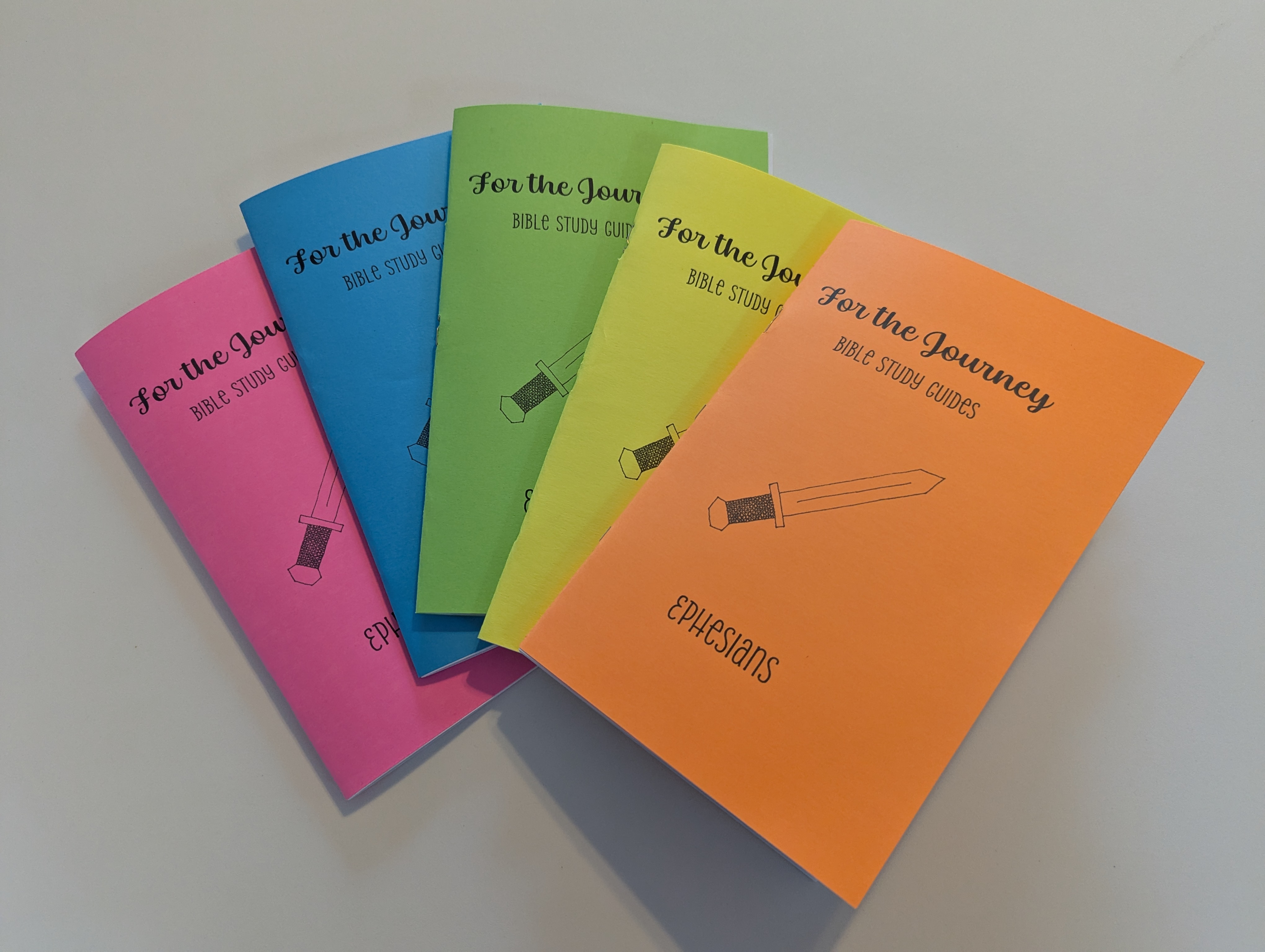
The most exciting thing during the month of August was finally releasing my third For the Journey Bible Study Guide. I chose Ephesians for this one. The Bible study guides are my newest For the Journey offering and haven’t been super successful, but I’m extremely passionate about Bible study and its importance and really enjoy writing them. So, at least for now, I plan to continue with them.

I think that covers August. I hope September is a little more productive. Stay tuned to find out!

God is Good

This month’s 30-Day Devotional highlight comes from my ninth devotional study “God is Good.” I think it’s my favorite. It’s really hard to choose a favorite, but I think it might be mine. I wrote it in less than two months, and it was a life-changing gift from God at a time I desperately needed it. I originally released it in August of 2023, and two years later, I still don’t feel like I’ve turned loose of it. More than any other writing project, this one has stayed with me. It later provided inspiration for a set of adult Sunday School lessons and then more recently for a devotional for church. God used it to change my thinking and help me significantly with some lifelong struggles, so I can’t say enough good things about it and am forever grateful for the impact it’s had on my life.

Without too much difficulty choosing this time around, I went with Day 3 for this highlight, and I hope you enjoy it!

 Guilty

“…And Jesus said unto her, Neither do I condemn thee: go, and sin no more.” -John 8:11

John 8:1-11

The woman in our passage today was clearly guilty. The missing man, who evidently got a free pass from the scribes and Pharisees, was too, but, still, she was guilty–taken in the very act of adultery. And, the Law was clear: She should be stoned.

The scribes and Pharisees brought her to Jesus, not because they cared about what she’d done, but because she was a pawn in their game of trying to trap Jesus. At first, Jesus ignored them. But, when they wouldn’t let up, in His goodness and grace, Jesus, knowing the crowd wasn’t so cold their consciences couldn’t be pricked by their own sins, said, “He that is without sin among you, let him first cast a stone at her” (John 8:7). 

Not a single stone was thrown that day because the only one there with a right to throw one was the one who wouldn’t, was the one who told her after the crowd left, “Neither do I condemn thee: go, and sin no more” (John 8:11). Jesus offered her grace and a new beginning.

I’m so grateful God is good even when we deserve to be condemned. Our sin might not be adultery, but we’re all guilty of sin. Thus, all any of us deserve is eternity in Hell for the sins we’ve committed against a perfectly holy God. Yet, in His goodness, He made a way for grace, even though it cost Him much–so much. He made a way for us to experience forgiveness and walk in newness of life. He’s good even when we deserve nothing but His condemnation. How we should ever praise and worship Him for being so good to us when we’re so undeserving!

God is good when we deserve to be condemned.

The Month in Review

Even if it was just entirely too hot for this winter person and even if I was a touch sleep deprived for most of it, July was a good month. It was productive in all the things…or at least most of the things. I think I’ve shared before about my overadventurous weekly to-do lists of For the Journey tasks that there’s no possible way I can complete in a week’s time. This month, however, there was actually one week that I did complete all the items with an asterisk out beside them marking them as top priority, and I counted that as a win. 

There were a few orders this month, and they were delivered in fancy new packaging that makes me smile. (Okay, so fancy might not be the right adjective, but it is a serious upgrade from a plastic grocery sack.) 

There were also three short devotional posts for the Facebook page, and even though I really did work on more than just teen lessons from Mark during the month, unintentionally, all of the Facebook posts came from Mark lessons. Speaking of the Facebook page, the Monday morning verses for July came from lessons from 1 Samuel, and the trivia fun focused on one of my favorite Bible characters–Ananias (but not the one who was married to Sapphira). 

July’s 30-Day Devotional highlight came from my eighth 30-day study “From the Master’s Teachings,” and the devotional I selected for the highlight focuses on forgiveness. Keep scrolling after this post to read it if you missed it.

I also made pretty good progress on my next Bible study guide this month. I’m starting to get excited and hope I might have that ready to offer soon. I made significantly less progress but still some progress on my next 30-Day Devotional. It might be ready next July. No, hopefully, it won’t be that long, but we’ll see…

There was also a lot of typing and some proofing and editing, but that pretty much covers July. It was busy, and it went by fast, but it was good. God abundantly blessed me in that, during most of my writing time this month, the words flowed smoothly, and that’s always special. It’s not that there aren’t blessings when I feel like I’m literally having to fight for every single word because there are, but the writing is definitely more fun when I’m not crossing out line after line and crumbling up papers. So, I’m grateful for smooth writing in July and can’t wait to see what August holds.

From the Master’s Teachings

This month’s devotional highlight comes from my eighth 30-Day Devotional “From the Master’s Teachings,” which was originally released in June of 2023. For this one, I mostly selected passages of scripture containing teaching material from Jesus during His earthly ministry and wrote devotionals from those passages, as you probably gathered from the title of the study. However, I also included some passages where Jesus’ words and interactions with individuals were instructive. And, after not writing an introduction at all for “The Greatest of These,” opting to use 1 Corinthians 13:13 instead, I went back to writing introductions with this devotional and had a lot of fun with the intro for this one.

As usual given my indecisive nature, I struggled with choosing which specific devotional to use for this highlight. I narrowed it down to four and then wound up going with Day 6, which wasn’t even one of the four. But, “Forgiven Much” caught my eye as I was struggling to make a decision, and after rereading it, I thought, “This is the one.” So, I hope you enjoy it.

Forgiven Much

“…O thou wicked servant, I forgave thee all that debt, because thou desiredst me:  Shouldest not thou also have had compassion on thy fellowservant, even as I had pity on thee?” -Matthew 18:32-33

Matthew 18:21-35

In today’s passage, Peter comes to Jesus with a question. He wants to know just how many times he has to forgive the brother who sins against him and thinks that seven times seems reasonable enough.  Jesus, however, doesn’t agree. He tells Peter to forgive him 70 times seven, which means to just keep forgiving and not keep count. Jesus then shares a parable to drive home His point.

In the familiar parable, a servant, after being forgiven a debt he couldn’t possibly repay in a lifetime by his lord, throws one of his fellowservants in prison for a far less substantial debt. When the lord of the unforgiving servant hears about this, he punishes the unforgiving servant severely and requires the debt in full.

After sharing the parable, Jesus makes a powerful statement, saying, “So likewise shall my heavenly Father do also unto you, if ye from your hearts forgive not every one his brother their trespasses” (Matthew 18:35).

True forgiveness from the heart is not easy. Oh, sure, it’s easy to forgive the person who accidentally bumps into us and apologizes profusely. And, it’s not all that hard to forgive the stranger who’s rude to us and ruins our day because we forget all about it by the next day. Forgiving the person who’s the reason we have trouble trusting people, forgiving the person who left us with painful scars, or forgiving the person we’re just going to have to forgive again for the same thing? Well, that’s an entirely different story…

But, we need to remember that we’re the servant who’s been forgiven much. If we’re saved, our Lord has forgiven us a sin-debt we’d spend eternity in hell for and never pay off. We’ve been forgiven for rebellion and that against our own loving Creator. We’ve been forgiven for repeated sins. We’ve been forgiven for secret sins no one knows about. We’ve been forgiven much–so much. The debts we’re owed are nothing in comparison to the debt we’ve been forgiven. Thus, we should freely forgive from the heart.

Remember you’ve been forgiven much.

The Month in Review

Today marks the end of another month. June was not as productive as I would have liked for it to be, but that’s pretty much the case every month. I did, however, revisit a couple of projects that had been shelved lately, making a little progress on my next Bible study guide and 30-Day Devotional study, heavy emphasis on little.

I worked on lessons more than anything else, focusing mostly on adult lessons from 1 Peter. I also finished up a middle school study from Genesis and worked some on lessons for teens from Mark.

I was a bit of a slacker with devotional posts for the For the Journey Facebook page, but there was one early in the month. Go check out “Just Care” if you missed it. Speaking of the For the Journey Facebook page, the Monday morning verses for this month were taken from key verses from adult Sunday School lessons from John, and this month’s trivia fun came from Jesus’ use of an Old Testament example to teach that the Sabbath was made for man and that the Son of man is Lord of the Sabbath.

Early in the month, I wrote a new blog post for the website titled “The How and Why of Bible Study.” Since Bible study is a topic I’m passionate about, I may have been a little wordy, so it’s sort of long but hopefully worth the read. Check it out if you missed it. June’s 30-Day Devotional highlight was taken from my seventh 30-Day Devotional study “The Greatest of These.” I chose “The Master Serves” for the highlight, which focused on the importance of following our Lord’s example and loving by serving.

That pretty much sums up June. Stay tuned for what July holds!

The Greatest of These

This month’s devotional highlight comes from my seventh 30-Day Devotional “The Greatest of These.” As a fun fact about this particular one, I’ve written a brief introduction for all of my other 30-Day Devotionals, but I didn’t write one for “The Greatest of These.” I didn’t forget, and I wasn’t just being lazy. I simply couldn’t think of a better introduction than 1 Corinthians 13:13, “And now abideth faith, hope, charity, these three; but the greatest of these is charity.” So, that was what I went with for the introduction. After all, that’s the verse that provided the inspiration for the title of the study, and all of 1 Corinthians 13 was influential as I wrote the devotionals.

Once again, I struggled to choose just one devotional to use for this highlight, but I finally settled on the devotional for Day 27 titled “The Master Serves.” I chose it because I needed the reminder not to be too busy or too caught up in my own life and my own problems to fail to look for ways to serve and help others. Jesus gave us such a powerful example of loving by serving, and it’s an example we need to be following.

The Master Serves

“If I then, your Lord and Master, have washed your feet; ye also ought to wash one another’s feet.” -John 13:14

John 13:1-17

I want you to try just for a minute to put yourself in the disciples’ shoes in our passage. You left your entire life behind to follow Jesus and have followed Him for over three years now. In that time, you’ve seen Him give sight to the blind, heal the sick, feed multitudes with practically nothing, calm a storm with just a word, raise the dead, and so many other miracles… And, now, He’s girded Himself with a towel and is about to wash your feet. Peter’s initial “No way!” reaction makes perfect sense to me.

This was God in the flesh, the Messiah, the Savior of the world, the all-powerful, all-knowing Son of God, and He was washing feet–even Judas Iscariot’s feet, knowing what was in his heart. Why? Because He loved His own to the end. Because He was still teaching them. They needed this example to follow. They needed to understand that to love is to humbly serve. And, that lesson is as much for us today as it was for them that night.

In our “all about me” world, we need to be different. We need to be washing one another’s feet. We need to be looking for ways to serve others, not for ways they can serve us. We need to stay humble and not view anyone or any task as beneath us. We need to show love by serving.

Love serves.

The How and Why of Bible Study

As someone who spends hours each week writing Sunday School lessons and/or devotionals and blog posts, it probably won’t surprise you that I’m pretty passionate about the importance of daily Bible study.  I don’t personally look at it as a spiritual discipline or a Christian duty, though it is both.  To me, it’s more a privilege and a joy, and I don’t understand why a person, especially a person claiming to be a Christian and to know the Lord, would ever neglect it.  

But, that’s the mindset of someone who’s been studying the Bible faithfully from a pretty young age and the mindset of someone who’s calling is intricately connected to Bible study.  It’s not the mindset of someone who struggles with Bible study.  And, I would imagine someone who struggles with Bible study probably gets tired of hearing, “Read your Bible every day!” “Study your Bible!” “Don’t neglect your morning Bible study!” Now, to be clear, I am not suggesting churches, pastors, Sunday School teachers, youth leaders, and so forth should stop encouraging Bible study.  Not at all!  But, I do think we often do a lot of telling people to read and study their Bible and perhaps not enough instructing them on how to study the Bible or explaining why they should study the Bible.  So, let’s dig into the how and why a little bit (or maybe more than a little bit because it’s a topic I’m passionate about, so I’ll probably get wordy).

How to study the Bible

1. By itself

I’ve already mentioned that I write Sunday School literature and devotionals, and I’ve also written a couple of Bible study guides.  So, I’m certainly not opposed to quality tools and study helps.  (In fact, I can hook you up with some if you need them.)  That said, there is no substitution for just digging into the Word itself.  Only the Bible is divinely inspired.  Only the Bible itself is part of God’s special revelation of Himself to mankind.  So, we have to move beyond reading a few verses and a short accompanying devotional and counting that as Bible study.  We have to really read the Word.  Reading devotionals, commentaries, and/or books on theology needs to be in addition to and never in place of the Word itself.

2. Read and reread

Writing Sunday School literature has taught me the beauty of reading and rereading the Word.  For a typical lesson, I’ll read through the section of text the lesson is taken from first before I do anything else.  Then, I’ll read it again and start developing an outline.  Then, I’ll read through it again to write out a summary and some questions for the lesson.  Then, I’ll read through it again working on application points.  Needless to say, there’s a lot of reading and rereading.  And, often with that reading and rereading, the outline and the lesson changes.  I notice things that didn’t stand out on that first read through, or I understand some of the verses a bit better from looking at them repeatedly and make some adjustments to the focus of the lesson.  Reading a chapter of the Bible is great.  I would never discourage that.  But, if we want to really understand what we read and glean as much as we can from the chapter, then we probably need to do a little reading and rereading.

3. Slowly

This is a big one and one that’s hard for us with our crazy busy lifestyles where we all have to-do lists a million miles long and a thousand places to be, but we can’t give ourselves five minutes and think we’re going to have quality Bible study.  When we sit down to study God’s Word, we need to take our time and go slowly.  We don’t need to race through chapters and books.  We need to spend real time in each passage we look at.  We need to allow time for looking at the surrounding context so that we are more likely to properly interpret the passage we’re studying.  I love good mystery and/or suspense novels, and especially if they’re good, I usually devour them pretty quickly because I want the mystery solved and the suspense to be over.  I want to have all the answers.  But, studying the Bible requires careful, focused reading.  It’s not like speed-reading through a page-turner.

4. With paper and pen

At the risk of sounding boastful, I was a really good student in school.  I was valedictorian of my high school class and graduated college in three years summa cum laude.  (I thought it was going to lead to success in life…  Now, I define success vastly differently and think all that effort was mostly a waste, but that’s neither here nor there.)  A big part of the reason I was able to do so well in school is because I was an excellent notetaker, and it helped with recalling information for exams.  Similarly, if we’ll study the Bible with paper and pen handy and jot down things that stand out to us and connections the Lord allows us to see as we study, we’ll be more likely to remember what we studied.  It will be more likely to come to our mind when we need it because we find ourselves in a battle with temptation.  Is it absolutely necessary to take notes while studying the Bible?  No.  Is it a good and helpful practice?  Yes.

5. Prayerfully

Prayer and Bible study are both vital to our spiritual life and well-being, and though we certainly shouldn’t only pray while we’re studying God’s Word, we definitely need to pray while studying God’s Word.

A. Pray for understanding

If you’ve read the Bible very much at all, you know that there are some passages that are difficult to understand.  And, going slow and reading and rereading will certainly help us with difficult passages, but we also need to pray for understanding.  We need to pray for God to help us see what we’re not seeing and grasp what we’re not grasping.  Often, He will.  Other times, He may give us peace about not understanding or lead us to reflect on it for a time and then circle back to it.  He will certainly hear and be pleased with our prayer for understanding and answer in His way and His time.     

B. Praise

As we really study the Bible, we will be amazed again and again at God’s goodness, at His power, at the depth of His love, at His abundant mercy and grace, and the list goes on and on and on.  When that happens, we just need to pause and praise.  We need to express our awe and wonder and adoration for our Lord because He is so deserving. 

C. Repent

Sometimes reading and studying the Bible is uplifting and encouraging.  It makes us feel joyful and at peace.  Other times, God’s Word cuts us to the quick.  Other times, studying His Word makes us see our sins and see how much room we still have to grow in sanctification.  It makes us feel desperately wicked.  And, we need to pray then too.  We need to repent.  We need to confess our sins and pray for strength overcoming them.  Repentance is part of studying the Word too.

D. Give thanks

Finally, we need to pray prayers of thanksgiving while we’re studying God’s Word.  We need to be thankful simply for the gift that is His Word.  We need to be thankful when He gives us the understanding we were seeking.  We need to be thankful when He uses His Word to bring us peace and joy.  We need to be thankful when He uses His Word to correct us and challenge us, realizing that’s an outpouring of His love.  We always need to be thankful for how God speaks to us through His Word.

Why to study the Bible

After several pointers on how to study the Bible, let’s look at some really important reasons to study the Bible.

1. To hear God speak

I think we all often find ourselves longing to hear God speak, and the great news is we can every time we open His Word.  Second Timothy 3:16 begins, “All scripture is given by inspiration of God…”  Yes, the Bible was written by multiple servants of the Lord over many years, but every word of it is from the Lord.  When we read and study it, we are blessed to hear God speak, and that should make us overjoyed to open our Bible every single day.

2. To be changed

We should also read the Bible to be changed by it.  As we faithfully study God’s Word, we will grow in wisdom and in the fruits of the Spirit.  We will grow stronger in our faith because we’ll know God better and therefore trust Him more.  Also, as mentioned when I talked about praying prayers of repentance while studying God’s Word, we’ll see things in our lives that aren’t pleasing to the Lord and be convicted to do more putting off of the old man and putting on the new.  Bible study will change us and in the best ways.

3. To avoid certain defeat

In Ephesians 6:11, we are instructed to put on the whole armor of God, and a few verses later, Paul, by God’s inspiration, went over that armor, and in doing so, he only mentioned one weapon–the sword of the Spirit, identified as the Word of God (Ephesians 6:17).  All the other armor is defensive.  It’s for our protection.  The sword, the Word, is our only means of attack.  Here’s the deal.  I think we can all agree we’re engaged in spiritual warfare.  Paul spelled that out plainly in Ephesians 6:12, which reads, “For we wrestle not against flesh and blood, but against principalities, against powers, against the rulers of the darkness of this world, against spiritual wickedness in high places.”  And, if all we have is protective gear, then we might be able to sustain some blows, but defeat is still certain.  There is no way to advance or gain ground.  There is no hope of victory.  You cannot wage war without a weapon.  Thus, we should study the Bible because defeat is certain if we don’t.